
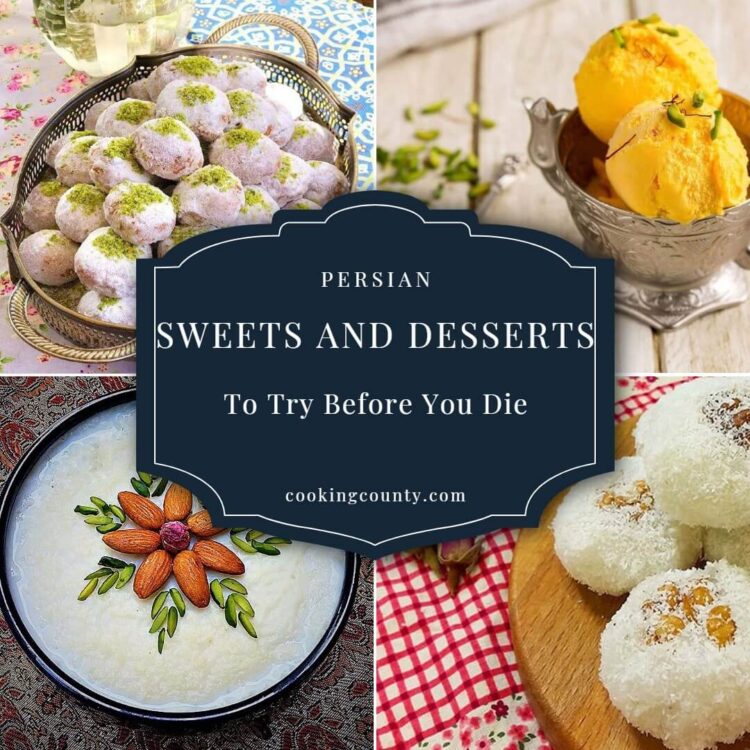
Whether it is a simple date or an exciting and colorful dessert; It is pleasant to eat sweets and desserts after the main meal. Historical evidence considers Iranian people to be among the first owners of this global habit, and this means that Iranian ancestors were among the first to believe in eating dessert. Therefore, it is not strange that Iran is rich in different types of delicious desserts, and you can find a special type of sweet and dessert in every part of Iran. Some Iranian desserts are a permanent part of the reception on special occasions or have become a symbol of religious vows and needs. In the following, we introduce the most famous Persian sweets and desserts.

Delicious Persian Sweets and Desserts
1- Halva: one of the oldest Iranian desserts
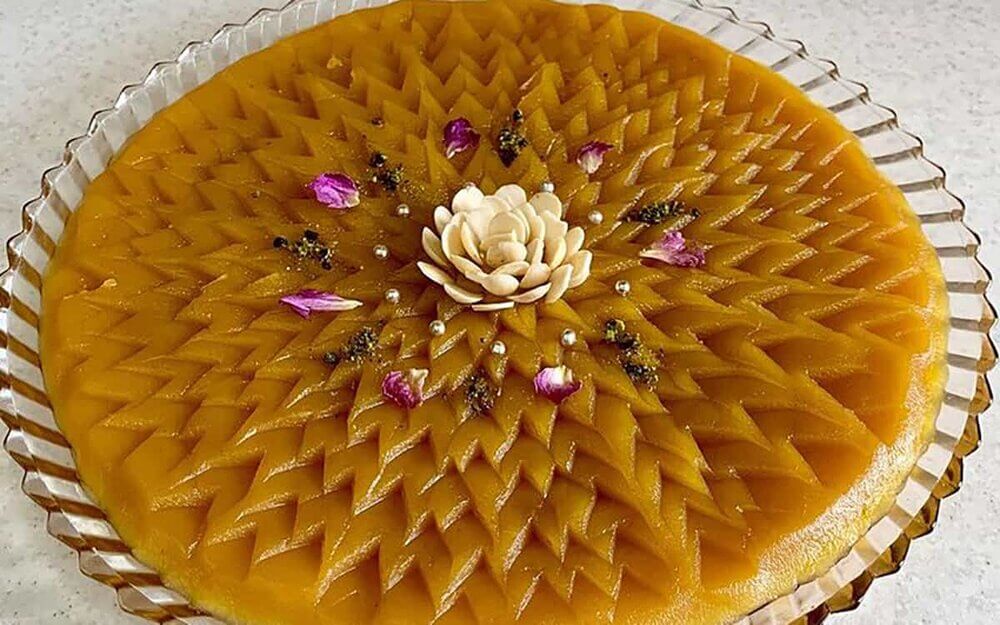
Saffron halva is one of the oldest desserts in Iran, and its name comes from the oldest Persian poems and stories. However, halva has become a constant basis for some special ceremonies and sometimes reminds us of bitter moments. Halva needs wheat flour, sugar, oil, saffron, rosewater, and cardamom.
The aromatic compounds like cardamom, saffron, and rosewater give halva an excellent taste. But this traditional and popular Iranian dessert is diverse, and people from many cities have their special recipes for making halva. Different types of halva can be accompanied by new ingredients such as eggs, corn starch, milk, almond kernels, white flour, rice flour, carrots, dates, etc. If you are interested in trying easy and inexpensive desserts, make different types of halva easily at home and enjoy their unique taste.
2- Sholeh Zard
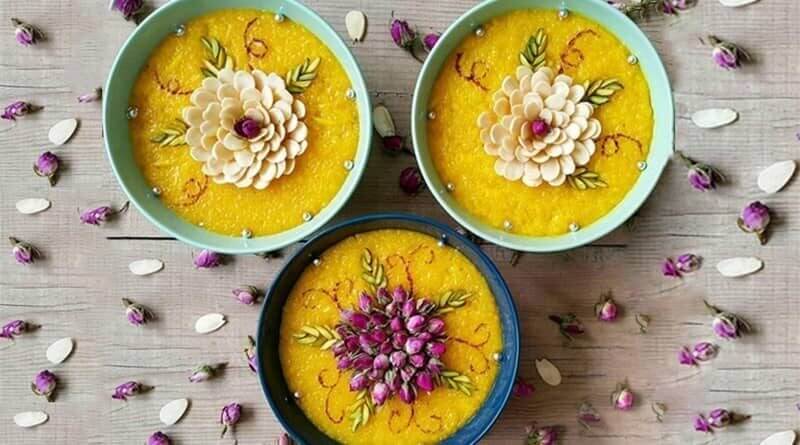
Making Sholeh Zard has become a kind of Iranian subculture and is sometimes associated with special ceremonies. This delicious Iranian dessert is mainly prepared on special religious occasions. The value of Sholeh Zard for Iranians is more than a simple dessert, and some tourists even refer to it as Nazri. Sholeh Zard is made of rice, rosewater, water, saffron, and sugar; The taste and aroma of Sholeh Zard have made it one of the famous traditional Iranian desserts at parties and various occasions, and of course, it has a high nutritional value. This dessert is often served with cinnamon and sliced almonds or pistachios, and sometimes cardamom is also used in its original aromatic composition.
3- Faloodeh Shirazi
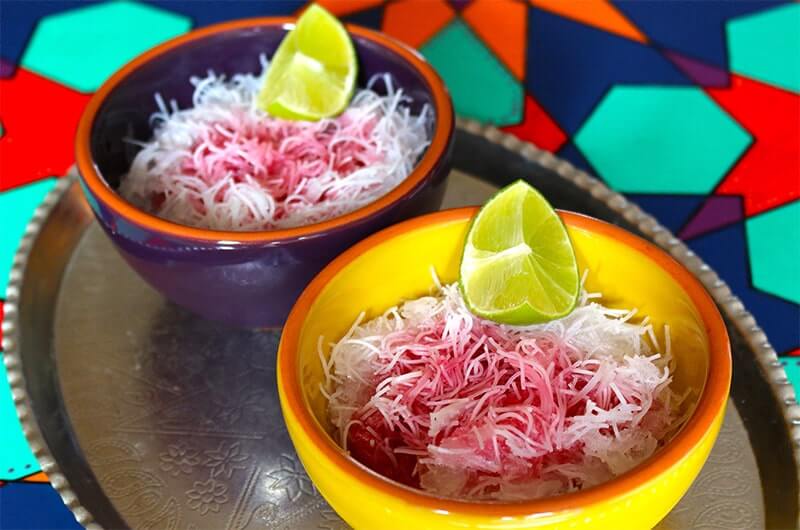
Faloodeh, or originally Paloudeh is one of the old and delicious Iranian desserts, which is the best dessert for summer. This dessert is obtained by turning melted starch into thin pastes. Faloodeh is a simple combination of these thin frozen noodles with sugar syrup and sometimes rosewater. Faloodeh can be found everywhere in Iran, But its different types go back to Shiraz, Kerman, and Yazd. Meanwhile, Faloodeh Shirazi is the most famous and popular of all. Shiraz is a mine of aromatic herbs; Falodeh Shirazi, accompanied by frozen noodles, lemon juice, and aromatic herbs, is an elixir to refresh the soul, especially in hot seasons. Paludeh Shirazi is sometimes served with ice cream and is especially popular among tourists.
4- Traditional Iranian ice cream
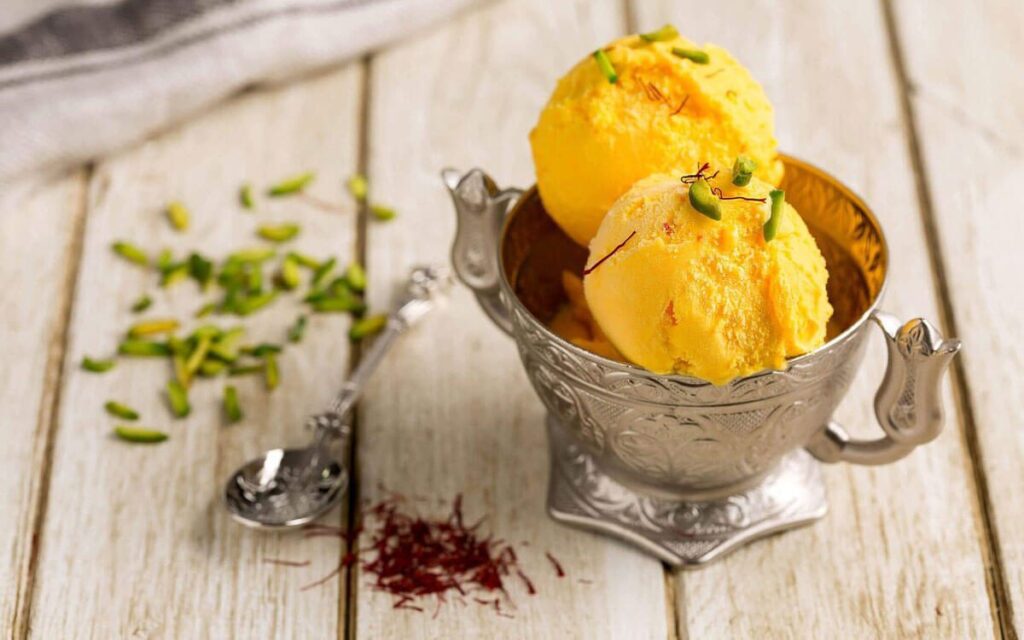
The history of ice cream is fascinating all over the world. But Iranian ice cream has another story. The aroma of rosewater and saffron is what distinguishes traditional Iranian ice cream. Saffron ice cream is one of the old deserts of Iran, whose creator intended to produce ice cream in harmony with the taste of the people of this region.
Akbar Malairi established the first traditional ice cream shop, Akbar Mashti, in Tehran and believed that ice creams made of saffron, rosewater, and fresh cream are more suitable for Iranians than ice creams from other countries. Traditional Iranian ice cream combines milk, cream, rosewater, saffron, sugar, flour, and pistachio slices. This very delicious dessert is served between two ice cream buns or a regular bowl, and sometimes it is served with Faloodeh. Traditional saffron ice cream has found its way to other parts of the world as one of the most valuable Iranian desserts.
5- Baslogh
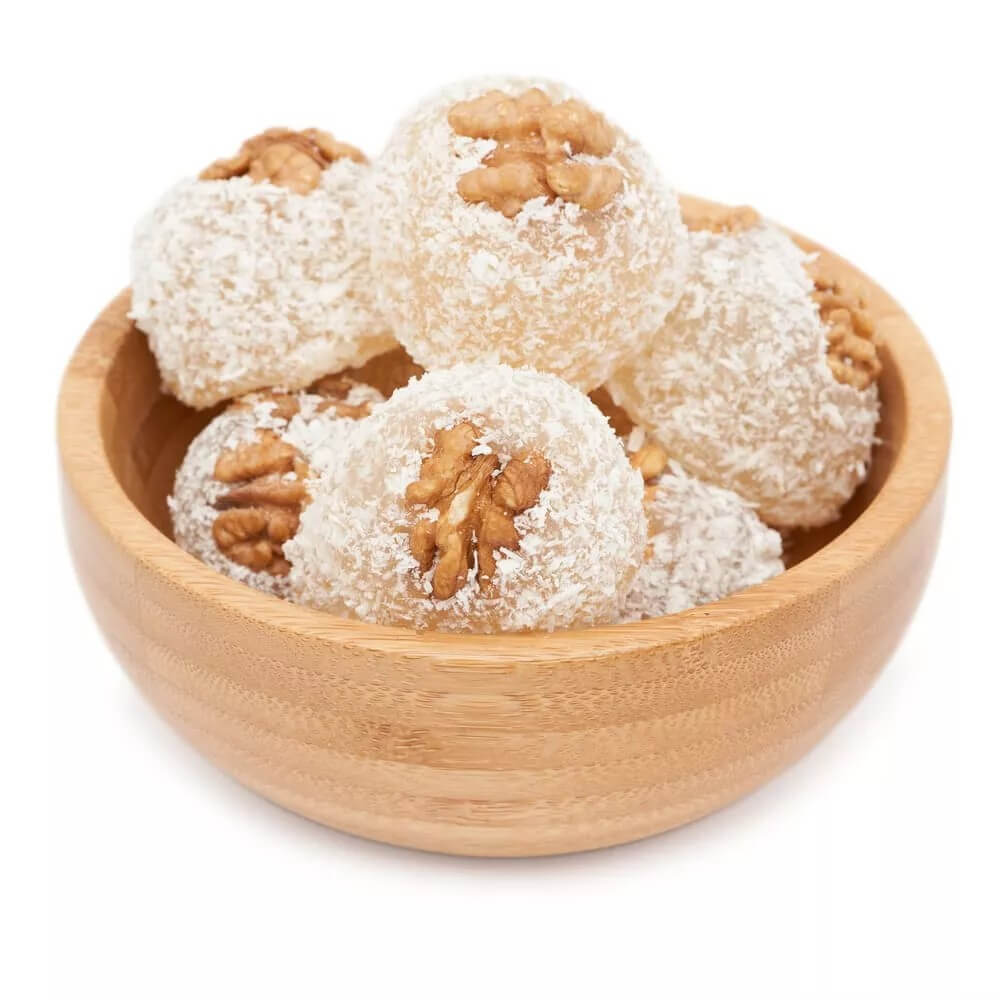
Baslogh is one of the simple homemade desserts that doesn’t need an oven. This dessert has Turkish origin, but it is served as a dessert among the Turkish-speaking Iranians in the cities of Tabriz and Ardabil. Among the different types of Basloogh, from jelly-colored baslogh to saffron basloogh, walnut baslogh is more popular than other types.
6- Shir Berenj

Shir Berenj is a traditional Iranian food famous as an Iranian dessert. This simple and delicious dessert can be cooked in different ways, but its main ingredients are milk and rice, so it is better to use half-grain and full-fat milk to prepare simple rice milk.
Iranian rice is the best rice you can use to prepare Shir Berenj. Because it is tasty after cooking and becomes very sticky, using half-grain rice will make it softer. If you don’t use half-grain rice in the recipe for delicious Shir Berenj, you should pour more water into the rice and devote more time to crushing the rice.
How to cook Shir Berenj? To prepare Shir Berenj, brew some saffron until it becomes thick, then add rose water and sugar to the rice milk.
7- Kachi
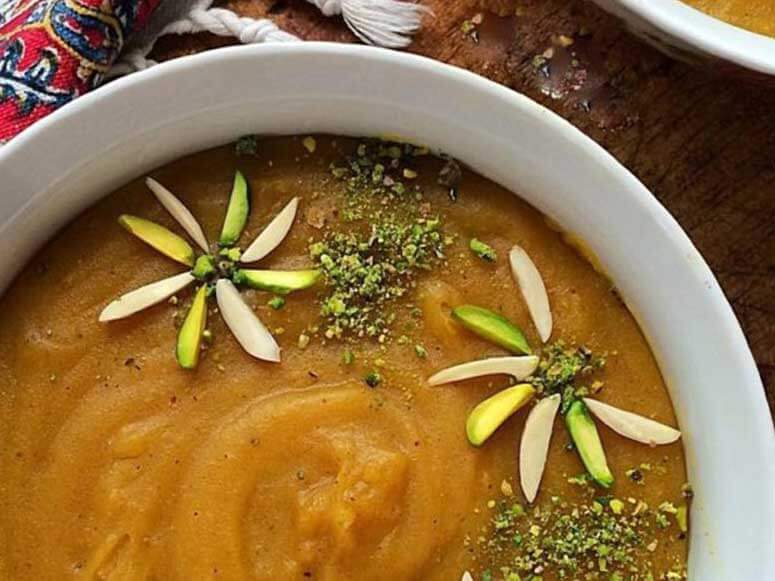
Tabrizi Kachi is very famous, and the people of Tabriz call this delicious and nutritious Iranian dessert “Quymaq” the people of Urmia call it “Doshab,” and the people of Kermani use 4 nuts to increase the strength of this delicious Iranian dessert.
Some add sugar, and in some areas, It is also customary to prepare Kachi by adding a little salt and turmeric. However, in general, the ingredients of this old and traditional Iranian dessert, regardless of the different names, with a bit of addition and subtraction of its ingredients, are similar in different regions of Iran.
8- Ghotab
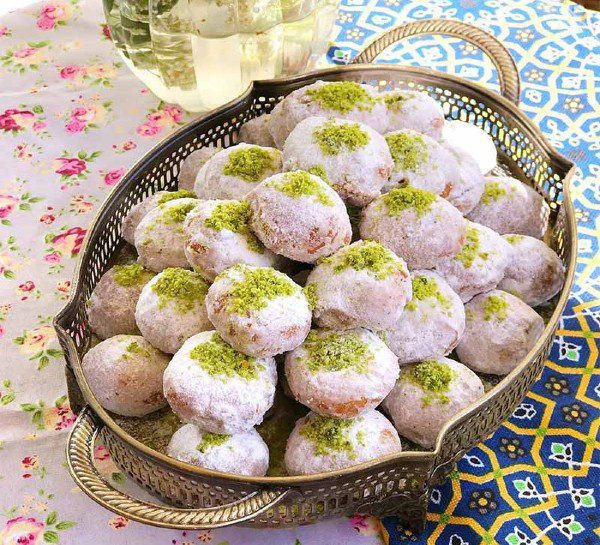
Ghotab is one of the oldest Iranian sweets, with many fans all year round, especially as a dessert for Nowruz or a simple Iranian dessert. Simple walnut Ghotab with spices such as cardamom and saffron is a traditional sweet of Yazd and Kerman provinces, and in these regions, it has its way of welcoming its fans all year round.
9- Yakh Dar Behesht
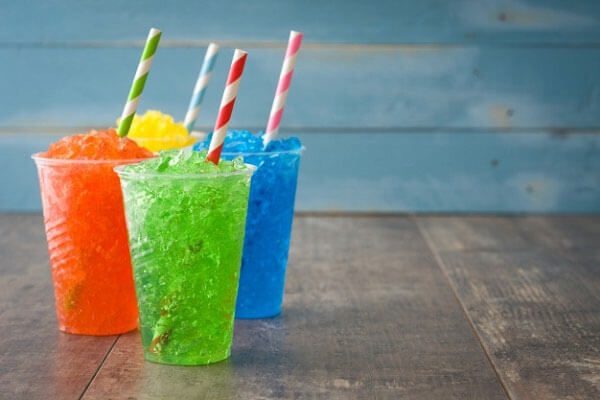
Yakh Dar Behesht is one of the oldest and most traditional cold drinks for hot summer days. It seems that the origin of Yakh dar Behesht is Isfahan, and when it went to Europe, it was called Frappe. In the distant years, ice was sold in heaven, making the summer heat bearable. Now that the tradition of ice in Behesht is slowly being forgotten, you can learn how to make ice in Behesht as an authentic and delicious Iranian dessert.
10- Masghati
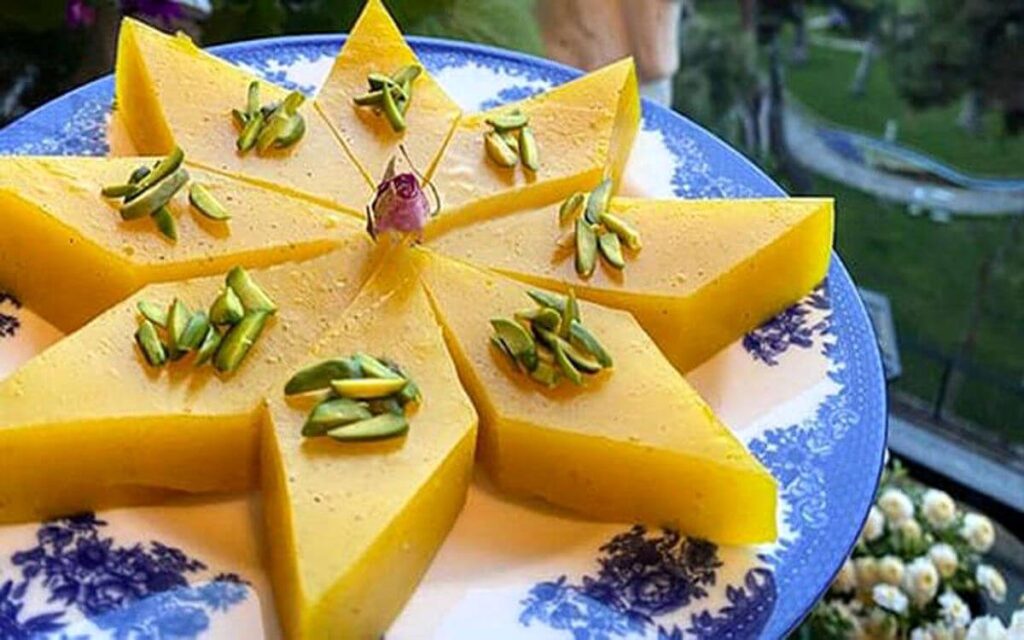
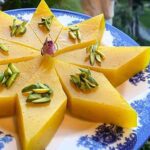
Masghati is one of the oldest halwa cooked in the southern provinces of Iran, especially Bushehr and Shiraz, and mainly in the Lar region, which is cooked for various religious occasions, celebrations, and mourning. This dessert is made with sugar, wheat, rosewater, and saffron.
What is the Main Feature of Desserts?
The sweetness of desserts is their main feature; sometimes, yogurt is also used as a diet dessert for people who don’t want to overeat sweets.
What Foods do Iranian Desserts Include?
Types of halva, faloodeh, ghotab, masghati, Sholeh Zard, Shir Berenj, etc., are among the list of Iranian desserts. Don’t forget that candies and similar foods, despite being sweet, are not considered desserts.
Over time, the type of Iranian family parties has changed. Putting any kind of food in front of the guest is no longer possible. People prefer to serve different kinds of desserts at their parties. For example, we can refer to Yazdi Baklava, baslogh, and walnut ghotab. However, people’s tastes are very different. Some people believe that eating dessert after the main meal is inappropriate. Others like to have a snack or a drink. If you are the second type, you can learn how to prepare several types of Persian desserts.
FAQs About Persian Sweets and Desserts
- What are the most popular desserts in Iran?
Masghati, Sholeh Zard, Ghotab, Kachi, etc., are among the most famous desserts in Iran.
- Is Shir Berenj considered a dessert?
Shir berenj is both served for dessert and the main course.
Related posts:
 Sholeh Zard Recipe (Saffron Rice Pudding)
 Halva Recipe; Persian Sweet Pudding
 Samanu recipe (Persian sweet paste)
 Ranginak (Persian Date Walnut Dessert)
 Sheer Yakh Ice Cream and The Way It Is Prepared
 Persian Ghotab recipe
 Zoolbia Recipe; 9 Tips you must not miss when making Zoolbia
 Masghati Recipe; Make this Delicious Persian Sweet in 5 Steps
